Picking a new refrigerator shouldn’t feel like navigating a kitchen showroom blindfolded. Whether you’re replacing an aging fridge or outfitting a newly renovated kitchen, understanding what to look for when buying a refrigerator cuts through the noise and helps you land on the right model for your home and budget. This guide walks you through the key considerations, from size and layout to energy costs and warranty coverage, so you can make a confident choice. A refrigerator is one of the few appliances you’ll use multiple times daily for 10–15 years, so it pays to think it through rather than impulse-buy based on looks alone.
Table of Contents
ToggleKey Takeaways
- Measure your kitchen opening carefully—width, height, and depth—before buying a refrigerator, and test doorways to ensure the unit will fit through hallways and around obstacles.
- Choose a refrigerator layout (French door, side-by-side, or top-freezer) based on your actual usage habits and accessibility needs rather than appearance alone.
- Look for the ENERGY STAR label and review the EnergyGuide operating cost estimate; an energy-efficient model can pay for itself within 5–7 years through lower utility bills.
- Select a capacity that matches your household size and shopping habits—18–22 cubic feet for individuals or couples, 25+ cubic feet for larger families or bulk buyers.
- Calculate total cost of ownership by adding the purchase price to estimated annual operating costs, and verify warranty coverage on key components like the compressor before finalizing your purchase.
- Clarify delivery terms, installation fees, and old fridge removal costs in writing before buying to avoid surprise expenses and long wait times.
Determine Your Kitchen Space and Refrigerator Size
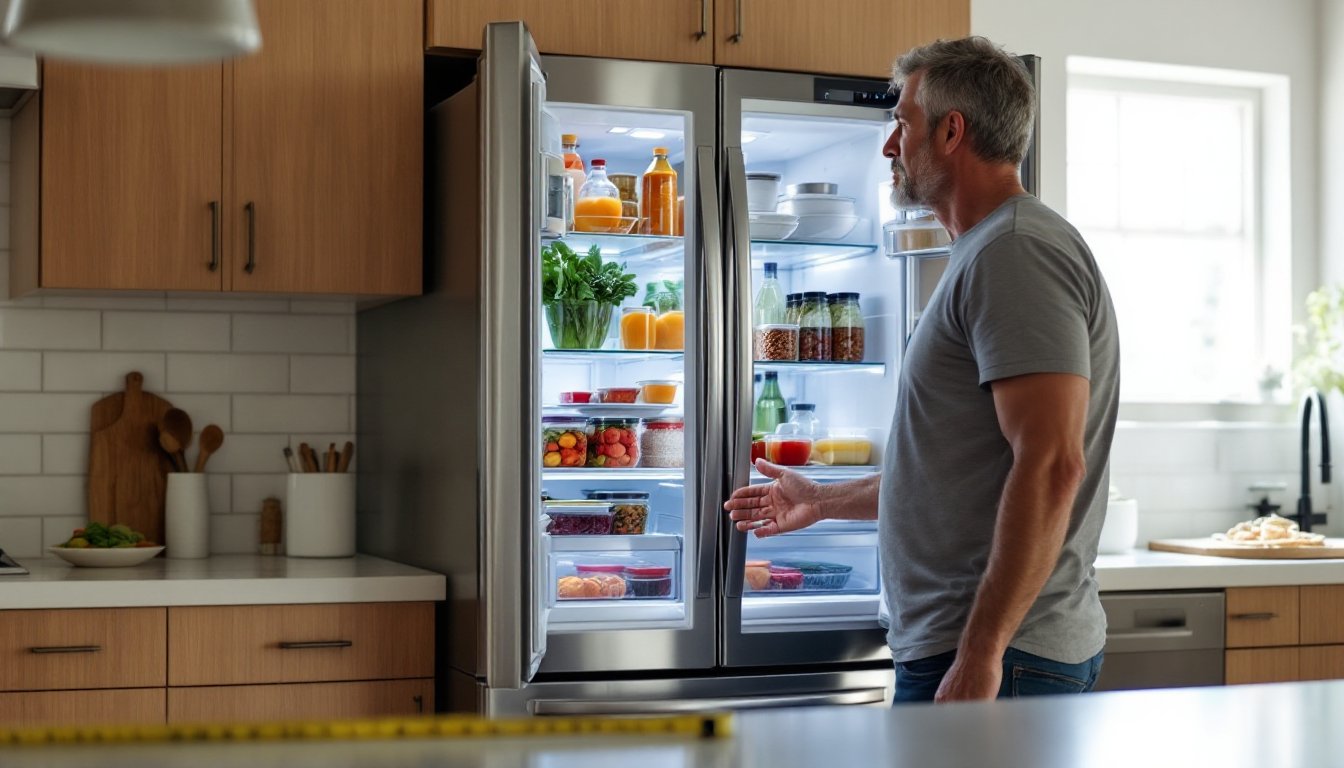
Before you even look at features or finishes, measure your kitchen opening. Most refrigerators come in standard widths (28–32 inches), but depths and heights vary. A standard cabinet opening is typically 35–36 inches wide and 68–70 inches tall: anything wider or taller needs special accommodation or might not fit at all.
Measure three times: the width, height, and depth of the space where the fridge will sit. Also check doorways and hallways on the path to your kitchen, moving a 36-inch-wide unit through narrow passages is surprisingly difficult. Note whether doors open to the left or right: some kitchens need a specific configuration to allow the fridge door to clear islands or walls.
Capacity matters alongside dimensions. A single person or couple might do fine with 18–22 cubic feet: families of four or more often need 25+ cubic feet. That extra space keeps you from overflow and reduces the temptation to buy duplicates. Also consider your shopping habits. If you buy in bulk or meal-prep weekly, a larger capacity pays dividends. If you shop twice a week for fresh items, a smaller, shallower fridge may suit your workflow better.
Evaluate the Type of Refrigerator That Fits Your Lifestyle
Refrigerator layouts fall into a few main categories, and each has trade-offs in terms of storage, accessibility, and foot traffic.
French Door Refrigerators
French door models feature two narrow doors at the top that swing outward, with a bottom freezer drawer. They’re popular because the narrow-door design doesn’t block your view into the fridge, and you don’t have to swing open a massive single door in tight kitchens. The bottom freezer works well for families who use fresh items more than frozen goods, since frequently grabbed items sit at eye level.
Downsides: freezer space is limited, and bending to access frozen items can be inconvenient for older adults or anyone with mobility challenges. Also, French door models tend to cost $100–300 more than comparable side-by-side units.
Side-by-Side and Top-Freezer Models
Side-by-side refrigerators split the width down the middle, freezer on one side, fridge on the other. They work well if you need equal freezer and fresh-food space and prefer everything at arm height without bending. The narrower doors fit tighter spaces too.
Top-freezer models are the budget option, with the freezer compartment above and fresh food below. They’re compact, reliable, and less expensive, but the freezer (often the smaller section) lives above eye level, and you’ll bend frequently to access the main fridge compartment. Top-freezer units suit households that prioritize affordability and don’t need massive freezer capacity.
Consider how you actually use your fridge. Do you freeze a lot of prepared meals, or do you mainly buy fresh? How often do you access the freezer versus the fridge? Your daily habits should guide the layout choice.
Assess Energy Efficiency and Operating Costs
A refrigerator runs 24/7, so energy efficiency directly affects your utility bill. Look for the ENERGY STAR label, which indicates the unit meets EPA standards and uses about 15% less energy than non-certified models. Check the EnergyGuide label, which shows estimated annual operating cost based on national average electricity rates.
On average, a modern refrigerator costs $40–100 per year to operate, depending on the model and your local electricity rates. An older fridge (pre-2000) might run $150–200 annually. If you’re replacing an aging unit, the energy savings alone can offset the cost of a new efficient model within 5–7 years.
Features affecting efficiency include the compressor type, insulation quality, and door seal condition. Inverter compressors (found in higher-end models) adjust cooling intensity rather than cycling fully on and off, reducing energy waste. Poor door seals let cold air escape: test this by closing a piece of paper in the door, if it slides out easily, the seal needs attention.
Also consider the freezer configuration. Bottom-freezer and French door models tend to be slightly more efficient than side-by-side units, because cold air doesn’t pour out as easily when you open a narrow door versus a full-width one.
Check Essential Features and Storage Options
Modern refrigerators pack a lot of features. Not all are necessary, but some genuinely improve daily life.
Ice and water dispensers in the door are convenient for families but add complexity (and cost). If the water line freezes or the dispenser breaks, you’re paying for a repair. Consider whether the convenience justifies potential maintenance headaches.
Adjustable shelving lets you customize space for tall bottles, small containers, or bulk items. Look for shelves that slide fully out (rather than stopping mid-way), so you can reach items at the back without awkward stretching.
Humidity-controlled crisper drawers keep produce fresh longer by regulating moisture. This is worth having if you buy fresh vegetables and fruit regularly: it cuts waste significantly.
Temperature-controlled zones (common in premium models) let you set a drawer or compartment to specific temps for deli meat, cheese, or wine. Nice-to-have but not essential unless you have specific storage needs.
Interior lighting should be bright enough to find items quickly. LED lights are standard now and use less energy than older halogen bulbs.
Also assess the freezer layout. Do you want multiple drawers for organization, or one large compartment? Drawers are easier to sort through and prevent items from getting lost in the back. One large compartment (typical in top-freezer models) can be messier but offers more flexible storage for oddly shaped items.
If you’re shopping internationally or need specialist features, resources like CNET’s product reviews and The Kitchn offer detailed comparisons of current models and real-world usage feedback.
Compare Pricing, Warranty, and Delivery Options
Refrigerator prices range from $600 (basic top-freezer) to $3,000+ (premium French door with smart features). Mid-range models ($1,200–1,800) offer good balance of efficiency, reliability, and features for most households.
Don’t automatically choose based on upfront cost. Compare the total cost of ownership: purchase price plus estimated annual operating cost (from the EnergyGuide label). A $200 more expensive, efficient model that saves $50 yearly pays for itself in four years.
Warranty coverage varies. Most manufacturers offer 1 year on parts and labor, with 5–10 year coverage on the compressor and sealed system (the most expensive components). Some retailers offer extended warranties: evaluate whether the extra cost makes sense for your situation. A budget unit from a reliable brand with a solid compressor warranty is often safer than a cheap model with minimal coverage.
Delivery and installation are crucial but often overlooked. Many big-box retailers offer free standard delivery but charge extra to haul away your old fridge, remove packaging, or install water/ice lines. Get a clear quote in writing before purchasing. Some retailers deliver within days: others take weeks. If your current fridge is failing, know the timeline before you order.
For expert guidance on which models stand up to real-world use, check expert-tested refrigerators that detail performance across different price points and styles.