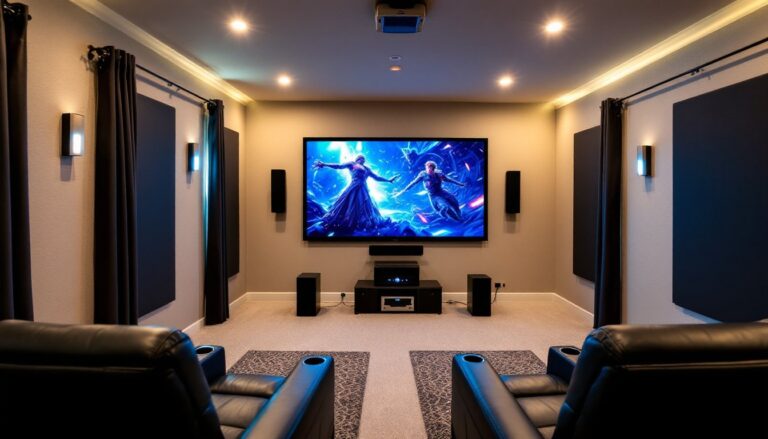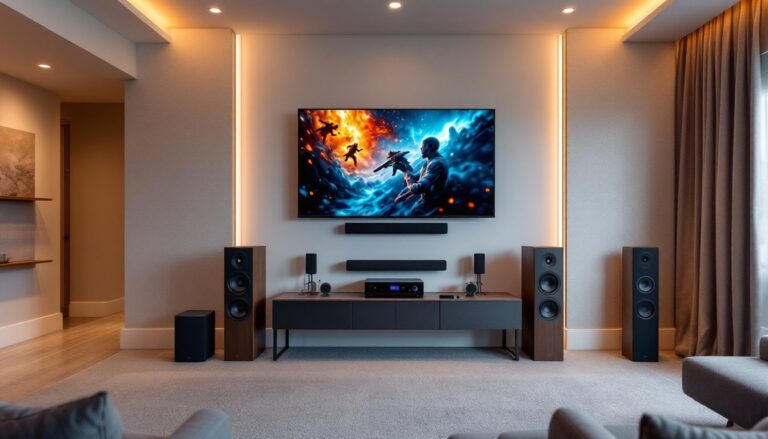
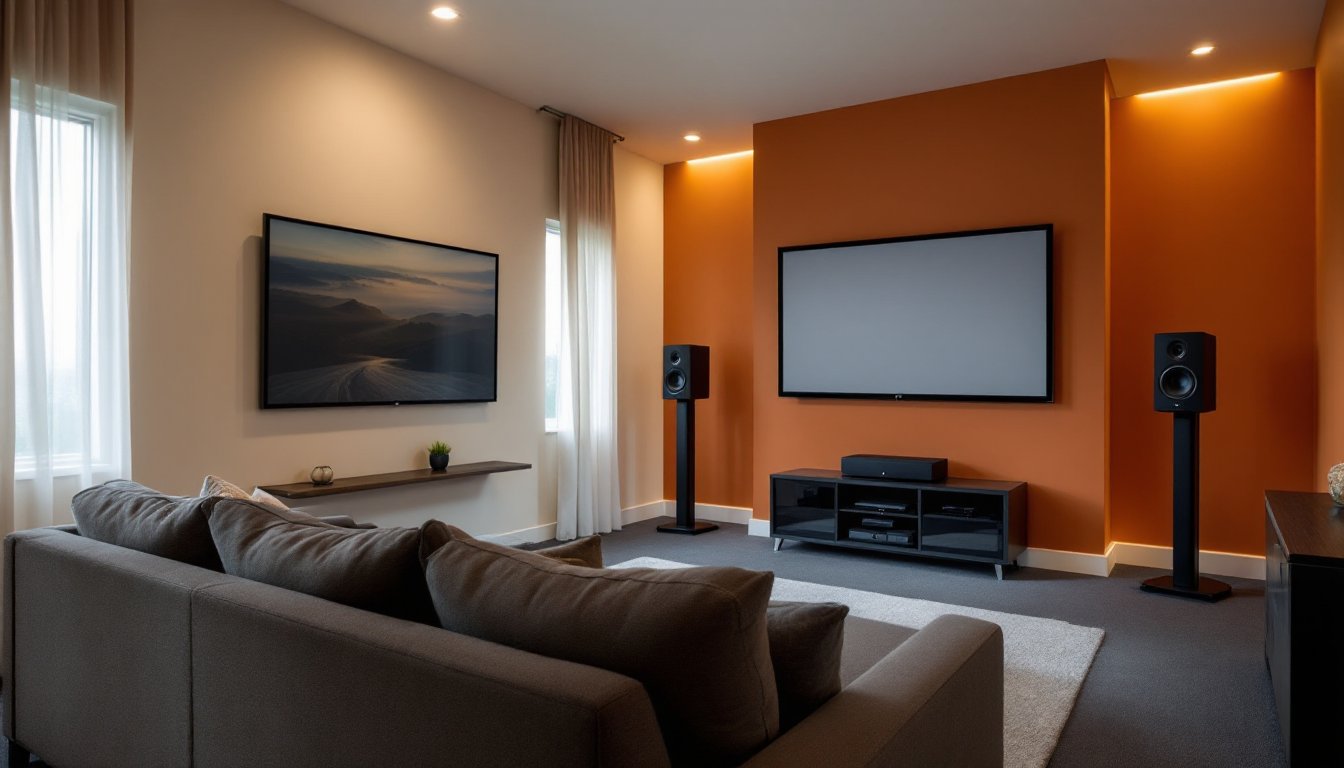
A powerful subwoofer can transform a home theater experience, but only if it’s actually in the right spot. Many homeowners invest in solid audio equipment and then plop the subwoofer wherever fits, under the TV stand, in a closet, behind the couch, and wonder why the bass sounds muddy or uneven. The truth is that subwoofer placement matters more than the gear itself. Bass frequencies behave differently than midrange and treble in a room, bouncing off walls, combining with room modes, and creating dead spots or hot zones. Getting subwoofer placement right means enjoying tight, controlled bass that enhances movies without rattling your chest cavity every time a door slams. This guide walks you through the science, common pitfalls, and practical placement strategies so your home theater sounds as good as it should.
Table of Contents
ToggleKey Takeaways
- Subwoofer placement matters more than the quality of the gear itself—correct positioning eliminates muddy, uneven bass by minimizing standing waves and room mode excitation.
- The front-corner rule is the most reliable starting position for home theater subwoofer placement, as it couples bass to two room boundaries and ensures better integration with center channel content.
- Bass frequencies are omnidirectional and long-wavelength (40 Hz = 28 feet), bouncing off walls and creating dead spots or hot zones, so placement relative to room dimensions is critical.
- Avoid common mistakes like tucking the subwoofer in a corner for convenience, placing it equidistant from walls, hiding it behind furniture, or positioning it far from the listening area—all of which degrade bass quality.
- Test subwoofer placement on a wheeled platform using movie scenes and sustained tone tests (40–50 Hz sine waves) before permanent installation to identify the best location in your room.
- Fine-tune volume, crossover frequency, and phase adjustment after placement is locked in, and consider professional calibration tools or AV technicians for rooms with extreme dimensions or reflective surfaces.
Why Subwoofer Placement Matters More Than You Think
Bass frequencies work fundamentally differently than higher audio frequencies. While mid and high frequencies radiate directionally, you can pinpoint where a voice or violin is coming from, bass wavelengths are long and omnidirectional. A 40 Hz tone from your subwoofer might have a wavelength of 28 feet: it bounces around your room, reflecting off walls, floors, and the ceiling, interfering with itself and creating standing waves. Standing waves are the enemy: they’re spots where bass cancels out completely or doubles up and booms. Room acoustics and bass response depend on your room’s dimensions, the subwoofer’s characteristics, and where it sits relative to walls and corners.
Understanding Room Acoustics and Bass Response
Every room has its own acoustic fingerprint. The distance between walls, the height of the ceiling, and the materials in the space (drywall, carpet, furniture, glass) all affect how bass behaves. A small, hard-walled room produces different bass characteristics than a large, heavily furnished space. When a subwoofer sits against a wall, it excites room modes, resonant frequencies at which the room naturally vibrates. This can make certain bass notes boom disproportionately while others disappear. Placement strategies aim to minimize these peaks and nulls so bass sounds consistent across the listening area. The goal isn’t maximum volume or maximum boom: it’s balanced, articulate bass that feels integrated with the rest of your audio and serves the content rather than overpowering it.
Common Placement Mistakes Homeowners Make
The single biggest mistake is tucking the subwoofer into a corner for convenience. While corners do couple bass energy to the room, they often introduce excessive boomy frequencies that make dialogue sound thick and muddy. Another common error is placing the subwoofer equidistant from adjacent walls, which creates strong standing wave patterns. Hiding the sub behind furniture or in an enclosed space (like inside a TV stand) chokes off bass response and creates reflections that muddy the sound.
Many homeowners also position the subwoofer far from the listening area, say, across the room from where they sit, thinking bass is omnidirectional so placement doesn’t matter. While bass is less directional than mids and treble, it absolutely is directional enough that you’ll notice a difference. The listening area should be relatively close to where bass is balanced: a subwoofer on the opposite end of the room from your couch creates timing delays and phase issues that your ears perceive as vagueness.
Another mistake is placing the subwoofer on a low-mass shelf or stand that vibrates sympathetically, transferring unwanted vibration to the structure. A solid, decoupled platform (rubber isolation pads work well) keeps vibration from traveling through your walls and floor.
The Front-Corner Rule: Your Starting Position
The most practical and reliable starting point for subwoofer placement is the front-corner rule: position the subwoofer near the front of the room, in the corner closest to your center listening position or at one of the front corners (where the front wall meets a side wall). This placement couples the subwoofer to two room boundaries, which gives you a strong bass foundation without excessive room mode excitation. The bass reinforcement from two walls is predictable and generally tighter than placing the sub in the middle of a wall or worse, in the middle of the room.
If your theater setup includes a center channel speaker (the one above or below your TV), placing the subwoofer at one of the front corners, ideally near that center channel, ensures that low frequencies integrate naturally with on-screen dialogue and action. The distance from the listening area to the subwoofer should be no more than 10–12 feet: beyond that, timing and phase relationships suffer.
Some rooms allow placing the subwoofer on the wall opposite the front wall, near a rear corner. If you test this position and it sounds good, it works. But, front-corner placement is the default for a reason: it tends to integrate better with center channel content and produces fewer null zones in the listening area. Start here, measure, and move only if listening tests show a real improvement elsewhere.
Alternative Placement Options for Different Rooms
Side Wall and Center Positioning
Not every room is a perfect rectangle with clear front and rear boundaries. An open-plan layout, an L-shaped media zone, or a room with irregular dimensions calls for flexibility.
Side wall placement works when space is tight or aesthetics demand hiding the subwoofer. Position it along the side wall nearest the listening area, rather than directly under a window or door (which can rattle). Side placement often produces less consistent bass across the room than corner placement, but it’s a solid compromise when the front corners aren’t viable.
Center positioning (centering the subwoofer on a wall, equidistant from the corners) is generally not recommended because it tends to excite room modes symmetrically and create nulls in the listening area. But, in very large, highly furnished rooms where bass reinforcement from corners is minimal, center placement can sometimes sound better. Test it if standard placement leaves dead zones.
Another option is multiple subwoofers. Two subs placed symmetrically (one at each front corner, or one at each side wall) smooth out room modes and reduce null zones. Recent home automation technology reviews from Tom’s Guide often feature dual-sub setups for larger home theater spaces. But, two subs cost more and require identical models and careful tuning, so it’s beyond most starter installations.
Temporary vs. permanent placement: Before drilling holes or committing to cabinetry, place the subwoofer on a wheeled platform so you can shift it around and listen critically. You’ll quickly feel where bass sounds tightest and most integrated.
Testing and Fine-Tuning Your Subwoofer Location
Once you’ve placed the subwoofer at a candidate location (ideally a front corner), run test content and listen critically. Use movie scenes with predictable bass, explosions, rumbling engines, footsteps. Play music with full-range content. Move around the room and note where bass sounds balanced, where it booms, and where it’s weak.
A practical trick: play a sustained bass tone (a sine wave generator, available free online, works) at 40 Hz or 50 Hz, walk around the room, and listen for where it’s loudest and quietest. If you hear dramatic peaks and nulls, your subwoofer is exciting strong room modes at that frequency. Shifting the subwoofer a few feet can significantly change where the peaks occur and flatten overall response.
Measurement tools like room acoustic software (REW, Audyssey, or your AVR’s built-in calibration microphone) can quantify response and guide adjustments. Most modern AV receivers include parametric EQ and distance/level calibration. Some receivers have auto-calibration microphones, use them. They measure response and suggest settings that compensate for room effects.
Fine-tuning parameters: Once placement is locked in, adjust the subwoofer’s volume (typically labeled SPL or output level) so it blends seamlessly with your main speakers. A common target is having the subwoofer measure about 75 dB (reference level) when playing standard test tones. Your receiver’s audio calibration menu guides this. Also adjust the crossover frequency, the point where the AVR directs low frequencies to the sub, to match your main speakers’ capabilities (typically 80 Hz for bookshelf speakers, 100+ Hz for compact speakers). Guides on DIY home improvement tools and workshop projects often cover receiver setup in detail. Finally, phase adjustment (0° or 180°) matters: flip the phase switch and listen. One setting will sound more integrated: stick with that.
Professional help: If your room has extreme dimensions, heavy reflective surfaces, or you’re installing subwoofers in a professional install, consider renting a calibration microphone or hiring an AV technician. The cost is worth clean, balanced bass that lasts years.
Getting It Right: The Payoff
Subwoofer placement isn’t complicated, but it does require thinking past “where does it fit?” to “where will it sound best?” Start at a front corner, listen critically, make small adjustments, and use your room’s acoustics to your advantage rather than against them. The result is home theater bass that serves the movie, not overshadows it, tight, controlled, and integrated. Your movies and games will thank you.